The Legend Of The Neapolitan Pastiera
🐣 The Easter Sweet That Comes From The Sea
In a city where even coffee has a personality and the stairs speak with the intonation of the neighborhood, there is a dessert that is not just a dessert. It is a ritual. It is a story. It is the Neapolitan Pastiera.
Pastiera is like dialect: you recognize it right away, even if you don’t fully understand it. It is not made by accident. It is not improvised. And woe betide you if you put custard in it if your aunt is listening.
According to legend, this cake was born from the sea. In fact, from a mermaid. And it is not a poetic metaphor. That is, it is. But it also isn’t.
Because in Naples, every good thing has a mythological origin. Even the Easter cake.
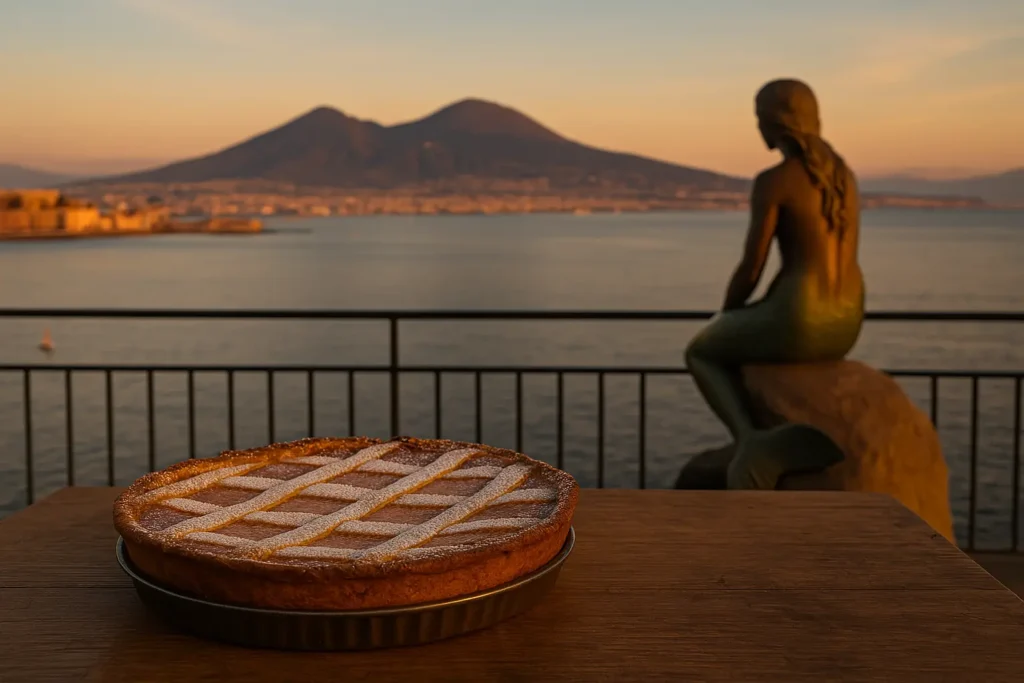
🌊 The Legend That Smells Like the Sea.
Long ago, when Vesuvius was just a boy and the Gulf was still shy, there lived a mermaid. Her name was Parthenope. She was not looking for sailors to sink, but for an audience to listen to her. And Naples, it is known, never backs down when there is a show.
Every spring, Parthenope would emerge from the waves and sing through the city. Her song was so sweet that it stopped everything: the boats, the trades, the arguments between neighbors.
One day, the residents decided that such a song deserved thanks. Not a medal. Not a comeback song. Something more concrete.
So they collected seven gifts, symbols of their land, their work, and their hope.
🏰 The Seven Gifts
Seven ingredients. Seven stories. Seven gestures of love.
Cooked wheat, for the fertility of the earth;
Flour, a symbol of daily work;
Eggs, promise of rebirth;
The cottage cheese, white as the voice of the mermaid;
Sugar, to make everything sweeter;
Orange blossoms, scent of holidays and weddings;
Spices, a reminder that even sweet things must have character.
Parthenope, it is said, took them. And singing, she mixed them.
Thus was born the Pastiera. A dessert that tastes of gratitude. Of home. Of things waiting.
Every spring, Parthenope would emerge from the waves and sing through the city. Her song was so sweet that it stopped everything: the boats, the trades, the arguments between neighbors.
One day, the residents decided that such a song deserved thanks. Not a medal. Not a comeback song. Something more concrete.
So they collected seven gifts, symbols of their land, their work, and their hope.
⏱️ A Cake That Can Wait
Pastiera is never in a hurry. It is not eaten right away. It is not prepared the day before.
In Naples they say, “S’ha dda ripusà.” He has to rest. At least two days. Three, if you want to get the blessing of the ancestors.
Because the Pastiera needs time to become itself. To be penetrated by the scents, to become history.
Grandmothers know this. They knew it before the Internet. Before written doses. Before nonstick pans.
“The shortbread must not be too thin.” “The ricotta cheese must be sheep’s milk, otherwise it’s something else.” “Just a drop of orange blossom, don’t take a bath!”
Every household has its own liturgy. Every home has its own version. But they all respect the sacred silence of the waiting time.
👵 A Legend That Passes From Hand to Hand.
Today, the legend is no longer told by Parthenope. The kitchens tell it. The hands. The Easter Sundays.
The Pastiera has become a witness. A ritual. A beautiful excuse to be together and fight with love.
“Who put the candied fruit?” “This is too dry!” “I like it cold, you don’t, but you eat it anyway.”
Each slice is an episode. Each pan is a story.
And as you eat it, between the crunch of the shortbread and the creaminess of the filling, you realize that it is not just a dessert.
It is the voice of Parthenope that comes to you from afar. Or perhaps from within.
✨ The Pastiera Is Not Eaten. It Is Told
The Pastiera does not need to be reinvented. It already has everything: myth, flavor, anticipation.
One does not eat out of hunger. One eats out of memory. Out of respect. Out of affection.
And every time someone makes it, even if it’s the first time, even if they’ve looked up the recipe online, a strange thing happens:
Suddenly, in the kitchen, it feels like we are not alone.
There is something in the air. A chant. A memory. A story.
Maybe it’s just the smell of wheat and cottage cheese.
Or maybe, it is Parthenope, still singing.
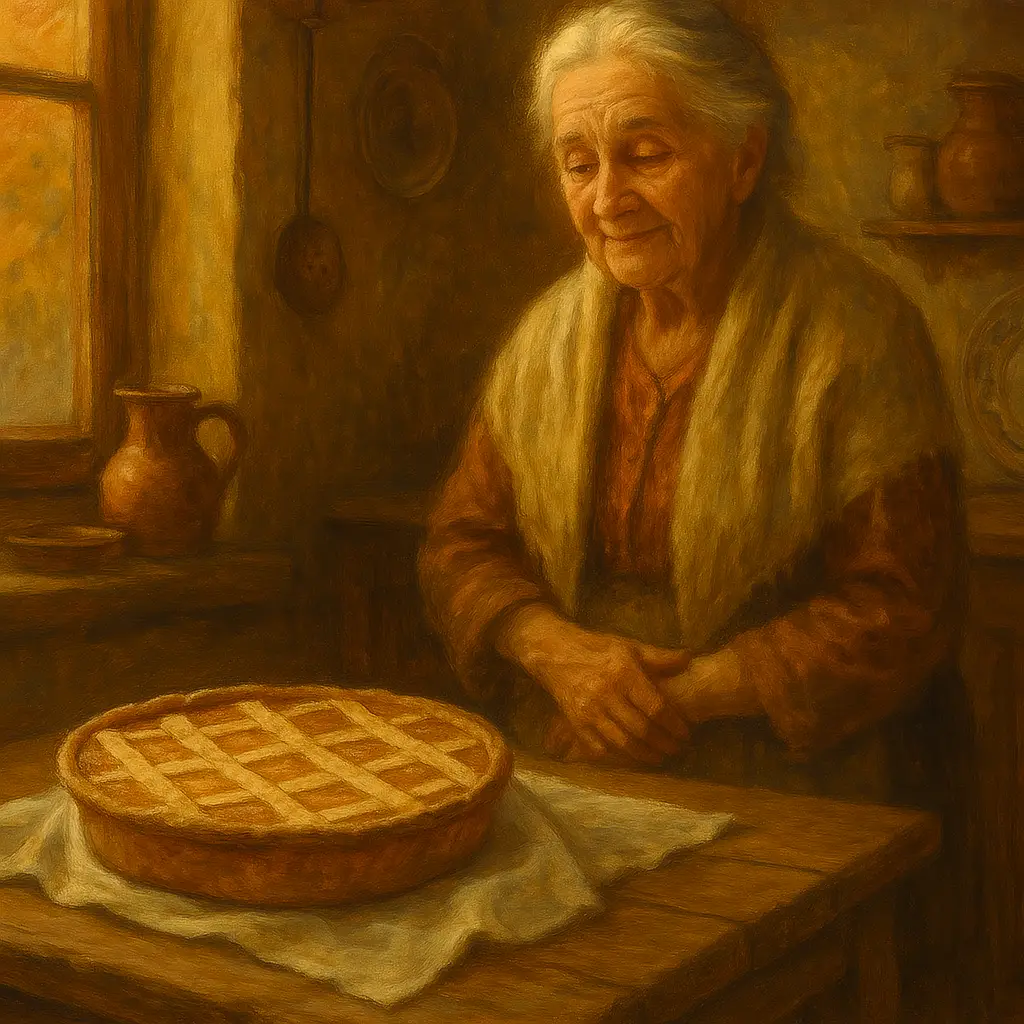
did you know that?
👉 La Pastiera is never eaten the same day. In Naples we say, “S’ha dda ripusà.” Resting is part of the recipe: it serves to marry the flavors and make it truly “pastiera.”
👉 The wheat used in the pastiera is cooked wheat, a symbol of fertility. It is found ready-made in jars, but Neapolitan grandmothers swear that the one soaked for days “is tutto n’ata cosa.”
👉 Partenope, the siren of legend, is considered the mythological founder of Naples. According to the myth, the pastiera was actually born from her song and the seven gifts offered by the inhabitants of the Gulf.
👉 Every family has its own “authentic” version. Some make it with candied fruit, some hate them. Those who use only sheep’s milk ricotta, those who prefer cow’s milk ricotta. But woe betide you if you say your grandmother made it “different”-you risk a holy war!
the Recipe
Cooking & Stories
This post is also available in: Italiano