History And Identity Of Pomodorino Del Piennolo Del Vesuvio.
🌋 When Time Stops Under Vesuvius.
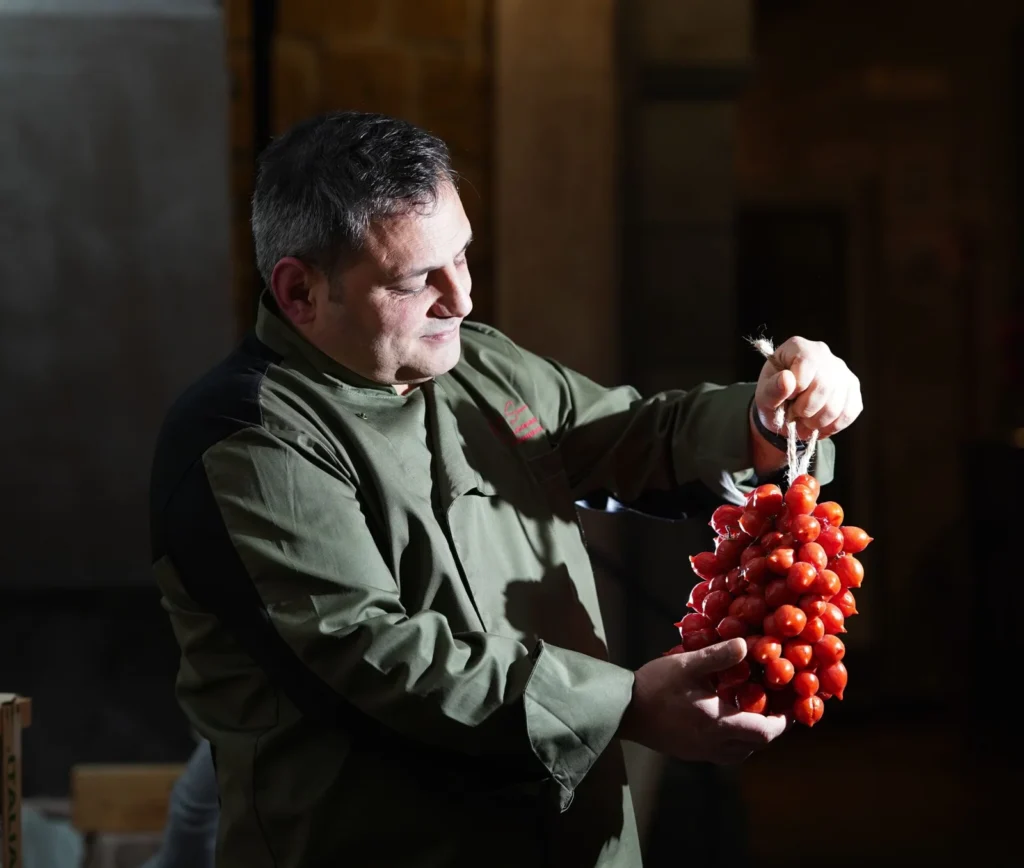
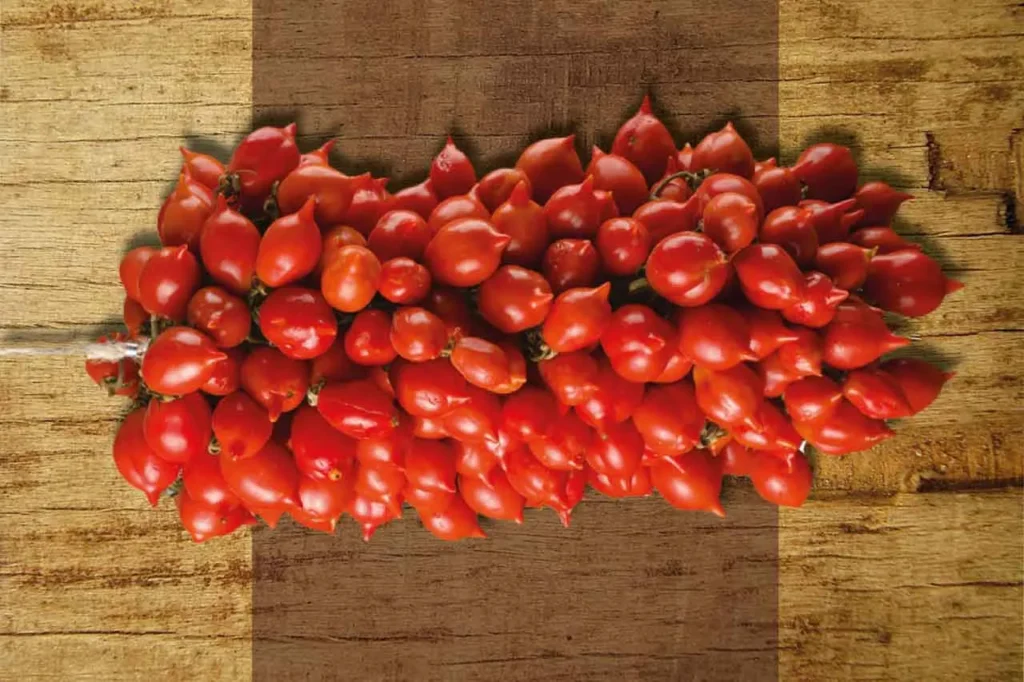
There are places where tradition is not just memory, but cultural endurance. On the slopes of Vesuvius, an ancient ritual is repeated every summer: clusters of small red tomatoes-sweet, hardy, bright-are hand-tied with hemp twine and hung to ripen, as was done with grapes or chilies.
It is the piennolo, one of the most poetic and identifying images of Campanian cuisine. Not just a preservation method, but a symbol: of patience, of territory, of love for the land.
🧭 A Tomato That Comes From Far Away.
Its thick skin and firm flesh made it perfect for enduring the cold months without the need for canning, bottles or refrigeration. A form of survival that has become a culture today.
The piennolo came from very far away. Introduced to Italy after the discovery of the Americas, it found its ideal habitat in the lava soil of Vesuvius. The name itself-“a piennolo”-describes the way it was stored dangling, hung for the winter in dry, ventilated environments.
🌱 From the Lava, A Concentrate Of Flavor.
What makes the difference is the black soil of Vesuvius: a dry soil but rich in potassium and trace elements, capable of concentrating sugars and acidity in the fruit.
The result? A cherry tomato with an explosive, intense, deep flavor. A leathery skin that encloses a sweet, slightly citrusy heart, perfect both raw and when cooked. It is a tomato that has character, like the people who grow it.
✋ A Chain Of Hands And Knowledge.
Piennolo cultivation still follows the rhythms and gestures of the past. It is sown between March and April, harvested only by hand-between July and August-and then the bunches are woven into ‘ncoppiate, large round bunches to be hung in kitchens, under-floors, and barns.
Nothing is thrown away. Each cluster is a small archive of memory, acollective agricultural work that brings together skill, patience and respect for seasonality.
🛡️ A PDO That Tells The Territory Chain Of Hands And Knowledge
In 2009 the piennolo officially became a PDO product, protecting its uniqueness and deep connection to the Vesuvian environment.
The specification is strict: area delimitation, manual techniques, native varieties, no artificial irrigation and harvesting only when fully ripe.
A safeguard that protects biodiversity and strengthens the voice of small producers, the true guardians of this heritage.
🍝 Not Just Ingredient: A Tale In The Plate
Piennolo is not just a tomato for sauce. It is a narrative that you eat, a flavor that carries with it the whole South: the land, the heat, the sacrifice.
In the kitchen, it is a versatile ingredient, best expressed in simple preparations: pasta, pizza, blue fish. But even in contemporary proposals, it knows how to stand out.
When I use it in my dishes, I know I am working with a piece of history. It doesn’t have to be twisted, just accompanied.
did you know that?
👉 Piennolo can keep up to 7 months without preservatives or refrigerator
👉 Traditional ‘ncoppiate are made by hand with more than 2 kg of tomatoes at a time.
👉 It grows only in 18 municipalities in Vesuvius Park, between 150 and 500 meters above sea level.
👉It is among the few Italian tomatoes to have a PDO recognized at the European level.
the Recipe
This post is also available in: Italiano